The Supremacy Of Kingship In Yorubaland: Ooni of Ife, Alaafin of Oyo, And The Authority Over Titles
By Kola Oladeji
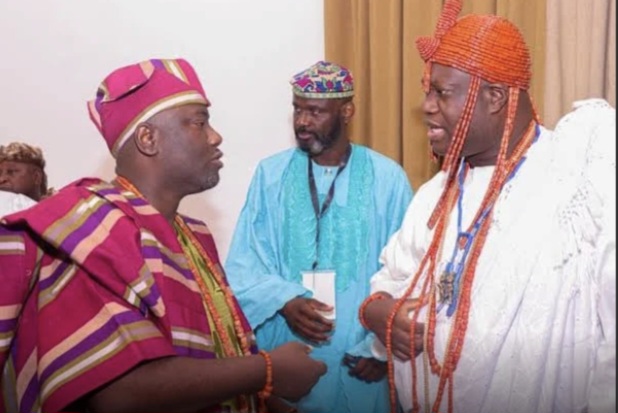
 In Yoruba civilization, kingship is not merely a political institution but a sacred trust, steeped in history, spirituality, and cultural authority. Among the pantheon of Yoruba monarchs, the Ooni of Ife and the Alaafin of Oyo stand tallest in historical prominence and influence.
The Ooni of Ife – Custodian of Origins


The Ooni of Ife occupies a spiritual throne. Ile-Ife is regarded as the cradle of the Yoruba people, the land of Oduduwa, the progenitor and ancestral father of all Yoruba. The Ooni is therefore revered as the “Arole Oduduwa” – the living representative of Oduduwa.
His authority is symbolic and spiritual, rooted in ancestry and unity, since all Yoruba trace their origin to Ife.
The Alaafin of Oyo – Imperial Sovereign
By contrast, the Alaafin of Oyo historically represented the political and military power of the Yoruba. The Oyo Empire (15th–19th centuries) grew into one of the most formidable empires in West Africa, extending influence into present-day Togo, Benin Republic, and beyond.
The Alaafin’s word was law, and his authority stretched far beyond Oyo, earning him the title “Iku Baba Yeye” – “the one who can command death and yet be father to all.”
The Power to Confer Pan-Yoruba Titles
When it comes to pan-Yoruba titles, such as those suffixed with “of Yorubaland,” the distinction is clearer:
The Ooni of Ife, as spiritual head, may bless and recognize individuals in symbolic or cultural capacities.
The Alaafin of Oyo, however, historically holds the exclusive prerogative to install military and political leaders with pan-Yoruba titles. The most important of these is the Aare Ona Kakanfo of Yorubaland, the supreme generalissimo of Yoruba warriors.
Historical Examples of the Aare Ona Kakanfo
The title of Aare Ona Kakanfo dates back to the 16th century during the reign of Alaafin Ajagbo. It was created as the highest military office in Yorubaland, second only to the Alaafin in political influence, but never allowed to reside within Oyo itself – a deliberate balance of power.
Some of the most notable Aare Ona Kakanfos include:
Afonja of Ilorin (early 19th century): Perhaps the most famous, Afonja was appointed by the Alaafin but later turned against Oyo, aligning with Fulani forces, which eventually led to the fall of Ilorin from Yoruba control.
Samuel Ladoke Akintola (1964): The Premier of the Western Region, Akintola was installed as Aare Ona Kakanfo by Alaafin Adeniran Adeyemi II, showing that even in modern times, the Alaafin alone retains this prerogative.
Chief Moshood Kashimawo Olawale (MKO) Abiola (1987): Business mogul and acclaimed winner of the annulled 1993 presidential election, Abiola was made Aare Ona Kakanfo by Alaafin Lamidi Adeyemi III, symbolizing Yoruba unity and resistance against oppression.
Gani Adams (2017): The current Aare Ona Kakanfo, a pan-Yoruba activist and leader of the Oodua People’s Congress (OPC), was appointed by Alaafin Lamidi Adeyemi III, further reaffirming that only the Alaafin can bestow the title.
Balancing Spiritual and Political Supremacy
This history underscores the dual nature of Yoruba kingship:
The Ooni of Ife represents origin, spirituality, and ancestry, serving as the unifying father of the Yoruba nation.
The Alaafin of Oyo represents political power, military strength, and imperial authority, with the unique right to confer titles that command Yoruba-wide legitimacy, such as the Aare Ona Kakanfo of Yorubaland.
Conclusion
The Yoruba kingship system is thus not a rivalry but a complementarity of sacred roles. The Ooni is the eternal custodian of Yoruba identity, while the Alaafin remains the sovereign authority for military and pan-Yoruba political titles.
To this day, the power to install the Aare Ona Kakanfo and similar titles resides solely with the Alaafin, reflecting his historic role as the imperial commander of Yorubaland.
This balance between ancestral spirituality and imperial sovereignty has preserved Yoruba tradition for centuries and continues to define the structure of authority across Yorubaland.