Nigeria Removed from EU’s High-Risk Financial List: Major Boost for Trade and Investment
The European Commission says Nigeria has strengthened its anti-money laundering and counter-terrorism financing frameworks, clearing the way for smoother transactions, increased investor confidence, and closer ties with Europe.

 Here’s a polished Jamisi News blog-style rewrite of your story ready for immediate publication:
Breaking: EU Removes Nigeria from High-Risk Financial Jurisdictions List
Nigeria has officially been removed from the European Union’s list of high-risk jurisdictions, a landmark development expected to ease trade, investment, and financial transactions between the country and Europe.


According to Business Insider, the European Commission confirmed on Wednesday that Nigeria, alongside South Africa, Burkina Faso, Mali, Mozambique, and Tanzania, has strengthened its anti-money laundering (AML) and counter-terrorism financing (CFT) frameworks. The bloc stated that these countries no longer pose “strategic deficiencies” under EU assessment standards.
The Commission further highlighted that the affected nations implemented key reforms aligning their financial systems with global standards set by the Financial Action Task Force (FATF), signaling improved transparency and regulatory compliance.
Nigeria’s removal from the list comes after years of concerted efforts to tighten oversight, enhance financial governance, and strengthen compliance across its banking and financial sectors.
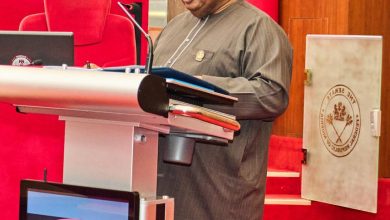
Reacting to the announcement, Minister of State for Finance, Doris Uzoka-Anite, described the development as a significant boost to investor confidence. In a post on 𝕏 (formerly Twitter) on Thursday, she wrote:
“Big win for Nigeria! Removed from EU’s financial ‘high-risk’ list! Congrats to President @officialABAT on this achievement. As Minister of State for Finance, I’m proud of this boost to trade and investor confidence.”
Being previously listed as high-risk meant Nigerian banks and businesses faced stricter documentation requirements, enhanced due diligence, and additional regulatory scrutiny for transactions involving European partners. This often led to delays in cross-border payments, higher compliance costs, and reduced foreign investment.
With the EU’s decision, analysts say Nigeria is now better positioned to attract European investors, accelerate trade, and strengthen its global financial reputation.