Yoruba Royalty and Power: A Tribute to Three Monarchs Who Shaped History, Politics and Culture
By Kola Oladeji
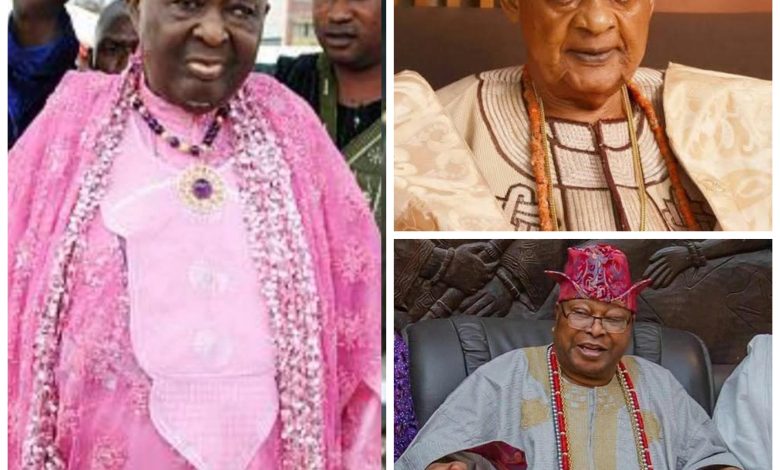
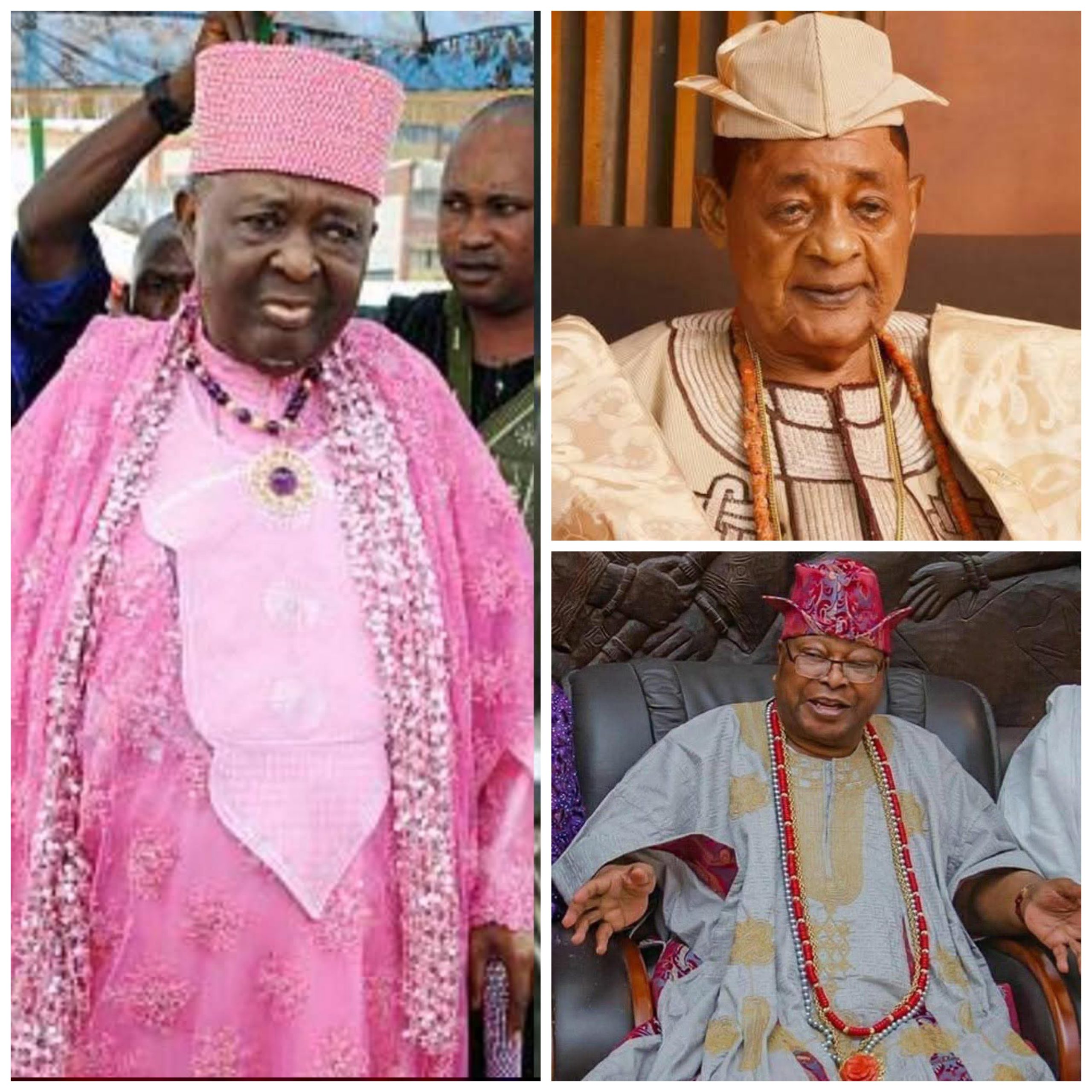 The Yoruba nation has, for centuries, stood as one of Africa’s most organised and influential civilisations, sustained by a revered monarchical system that blends tradition, spirituality and political relevance. Among the pantheon of Yoruba royalty, three monarchs stood out in modern Nigerian history for the length of their reigns, the weight of their influence and the indelible legacies they left behind: the late Alaafin of Oyo, Oba Lamidi Olayiwola Adeyemi III; the late Ooni of Ife, Oba Okunade Sijuwade, Olubuse II; and the late Awujale of Ijebuland, Oba Sikiru Kayode Adetona.
These three royal fathers were not only custodians of ancient thrones, they were living institutions whose voices resonated far beyond palace walls, shaping politics, governance, culture and national discourse.
Alaafin Lamidi Adeyemi III (1970–2022)
Oba Lamidi Olayiwola Adeyemi III ascended the throne of the Alaafin of Oyo on January 14, 1970, becoming one of the longest-reigning monarchs in Yoruba history. For over five decades, the Alaafin stood as a fearless defender of Yoruba heritage, history and political relevance. Until his passing on April 22, 2022, he remained a towering intellectual voice, widely consulted by political leaders, traditional rulers and scholars alike.
Renowned for his deep understanding of Yoruba history and governance, Alaafin Adeyemi was never silent on national issues. He openly engaged political developments, cautioned governments when necessary, and consistently advocated for justice, restructuring and respect for traditional institutions. His palace in Oyo became a centre of ideological discourse, making him one of the most politically influential traditional rulers of his generation.
Ooni Okunade Sijuwade, Olubuse II (1980–2015)
Oba Okunade Sijuwade ascended the revered throne of the Ooni of Ife in 1980, occupying what is widely regarded as the spiritual heart of the Yoruba race. Until his death on July 28, 2015, the Ooni reigned for 35 years, transforming the throne into a global symbol of Yoruba unity, culture and prestige.
Beyond spirituality, Ooni Sijuwade was a master bridge-builder. He cultivated strong relationships with presidents, governors, international leaders and the private sector. His influence extended into diplomacy, business and national reconciliation. At critical moments in Nigeria’s political journey, his counsel was sought, and his interventions often helped stabilise tense situations. He projected Yoruba culture onto the world stage, reinforcing the relevance of traditional leadership in modern governance.
Awujale Sikiru Kayode Adetona (1960–2022)
Oba Sikiru Kayode Adetona ascended the throne of the Awujale of Ijebuland on April 2, 1960, making him one of the longest-reigning monarchs not only in Yorubaland but in Africa. He reigned for over 62 years until his death on July 14, 2022, witnessing Nigeria’s journey from independence through multiple political eras.
The Awujale was widely respected for his principled stance on governance, accountability and development. Known for his blunt honesty, he maintained strong influence in national and regional politics, particularly in Ogun State and the wider South-West. He was a vocal advocate for good governance and never hesitated to challenge political leaders when the interests of his people were at stake.
Enduring Legacies
Collectively, Alaafin Adeyemi III, Ooni Sijuwade and Awujale Adetona represented the enduring power of Yoruba traditional institutions in modern Nigeria. They proved that kingship is not merely ceremonial, but a living force capable of shaping political thought, promoting unity and preserving cultural identity.
Though they have joined their ancestors, their legacies remain firmly etched in history. Their reigns reaffirmed the place of Yoruba monarchs as moral authorities, political influencers and guardians of a civilisation that continues to command respect across Nigeria and beyond.
Jamisi News